
Frostbite is a serious cold-weather injury that damages the skin and deeper tissues due to prolonged exposure to freezing temperatures. It can occur during winter sports, hiking, outdoor work, or severe windchill. Understanding the stages of frostbite and early interventions is crucial because timely frostbite treatment can make the difference between a full recovery and permanent tissue loss. People living in extremely cold climates or those who frequently participate in outdoor winter activities must be aware of frostbite causes, warning signs, and prevention strategies to stay safe.
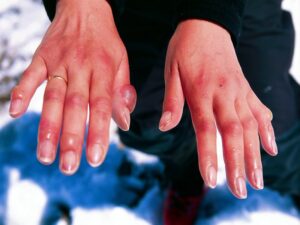
What Causes Frostbite?
The primary frostbite causes include exposure to freezing temperatures, wet clothing in cold weather, and inadequate protection like thin gloves or damp socks. When the skin and tissues freeze, ice crystals form inside cells, restricting blood circulation and damaging nerves. High-risk situations include high altitudes, strong winds, and long durations outdoors. Individuals with diabetes, poor circulation, or dehydration are more vulnerable. Alcohol consumption and fatigue can also impair judgment and increase the likelihood of frostbite.
Recognizing the Signs and Symptoms of Frostbite
Identifying early signs of frostbite promotes faster recovery and reduces the risk of complications. Frostbite symptoms progress through distinct levels:
Stage 1 – Frostnip (Mild)
Frostnip is the earliest stage, affecting only the surface layer of the skin. The skin may feel extremely cold, tingly, or numb, with a pale or yellowish appearance. At this stage, the skin does not permanently freeze, and the condition is reversible with quick warming. Although mild, frostnip is a warning signal that deeper frostbite may follow if exposure continues.
Stage 2 – Superficial Frostbite (Moderate)
This stage leads to more intense frostbite symptoms such as hardened skin, swelling, and fluid-filled blisters. The outer skin begins to freeze while deeper tissues remain unaffected. After rewarming, the skin may appear blue or mottled, and pain becomes more pronounced. Medical attention is recommended to prevent progression.
Stage 3 – Deep Frostbite (Severe)
Deep frostbite is the most dangerous stage and requires urgent severe frostbite care. Blood vessels freeze, tissues die, and nerves suffer permanent harm. The affected area turns hard, black, and numb with loss of sensation. Without prompt medical treatment, gangrene or amputation may occur. Permanent damage is common at this stage.
Frostbite Treatment and Care
Effective frostbite treatment depends on the stage at which the injury is identified. For frostnip and mild cases, gently rewarming the area using warm (not hot) water, dry clothing, and body heat can restore normal function. Rubbing or massaging the affected skin must be avoided to prevent further tissue damage.
Moderate to severe frostbite requires medical intervention. Hospitals may provide whirlpool therapy, clot-busting medications, pain management, wound care, and antibiotics to prevent infection. When tissue destruction is extensive, surgical procedures or amputation might be necessary. The earlier treatment begins, the higher the chances of saving affected body parts.
Frostbite Prevention Tips
Proper frostbite prevention is the best way to avoid damage. Key safety measures include:
- Wear thermal layers, insulated gloves, and waterproof boots.
- Keep clothing dry and change immediately if it becomes wet.
- Take frequent breaks indoors during outdoor winter activities.
- Stay hydrated and avoid alcohol when exposed to cold.
- Monitor weather conditions and avoid going out during extreme cold alerts.
Children, older adults, and people with circulation disorders should be given extra attention during cold exposure.
Final Thoughts
Frostbite is not only painful but can lead to lifelong consequences when left untreated. Recognizing the early signs of frostbite, understanding frostbite symptoms and frostbite causes, and taking proactive steps toward frostbite prevention can significantly reduce risk. From mild frostnip to the irreversible damage seen in deep frostbite, each stage requires awareness and swift action. When frostbite becomes advanced, severe frostbite care administered by medical professionals is crucial to preserve tissue and prevent long-term disability.
Frequently Asked Questions (FAQs)
1. How long does it take for frostbite to develop?
Frostbite can develop within minutes in extremely cold or windy conditions, especially when skin is exposed.
2. Can frostbite heal on its own?
Mild frostnip can heal with rewarming, but moderate or deep frostbite requires medical treatment to prevent complications.
3. What is the first step in frostbite treatment?
The first step is to move to a warm environment and gently rewarm the affected area using warm water or body heat—never hot water or direct heat.
4. Are blisters a sign of severe frostbite?
Yes, blisters indicate moderate to severe frostbite and require professional medical care.
5. Can frostbite be completely prevented?
Yes, most frostbite cases can be avoided with proper clothing, dry layers, hydration, and avoidance of prolonged exposure to extreme cold.
Severe cold exposure can lead to frostbite—act quickly. Visit our website https://sccdallas.co/services/injury/ for recovery tips and call us at (469) 884-1975 to speak with a specialist today.